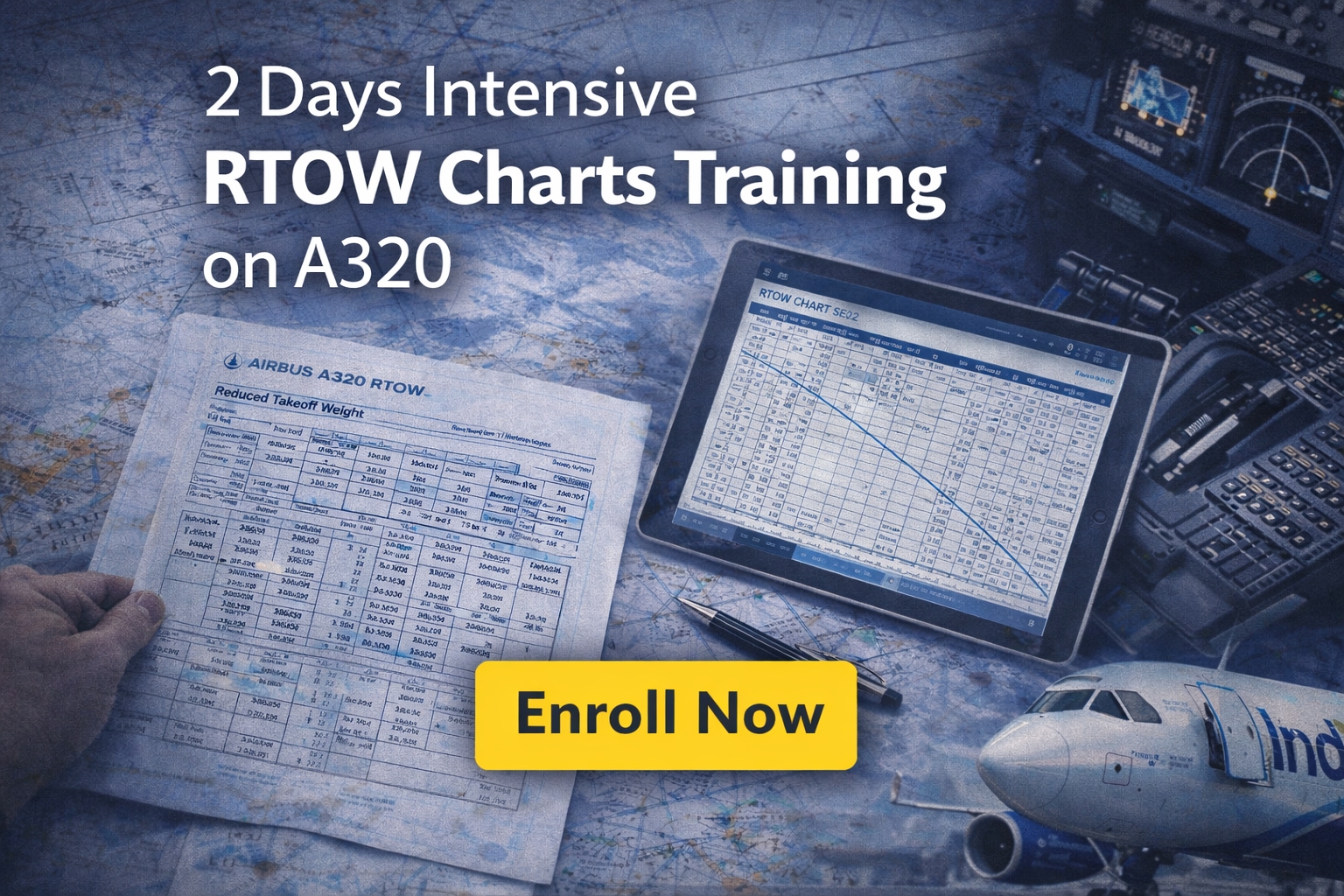
Flight Planning and Fuel Calculation
- 02 Days
- 12 Lectures
- 64+ Students Enrolled
The Flight Planning and Fuel Calculation course is a professionally designed aviation training program that provides a clear and practical understanding of how flights are planned and how fuel requirements are accurately calculated in real airline operations. This course focuses on the principles, procedures, and regulatory standards followed in commercial aviation to ensure safe, efficient, and economical flight operations. Participants will learn how to prepare an Operational Flight Plan (OFP), select appropriate routes, plan alternates, and calculate fuel by considering factors such as aircraft performance, weather conditions, winds, airspace restrictions, and regulatory fuel reserves. The training also explains different types of fuel requirements, including taxi fuel, trip fuel, contingency fuel, alternate fuel, and final reserve fuel.

Course Overview
The Flight Planning and Fuel Calculation training provides practical and industry-oriented knowledge of how commercial flights are planned and how fuel is calculated accurately and safely.
The program focuses on real airline operational practices, covering route planning, fuel policies, weather and wind analysis, and regulatory requirements.
This training is designed to help participants develop a clear understanding of operational flight planning and build essential skills required for careers in aviation operations, pilot training, and flight dispatch.
Requirements
- 10+2 / Graduation (Preferred)
- Good Communication Skills
- Age Group -18-28 Years
Certification
◉ Certification: Certification (or award, credential, license, diploma, degree, etc.) follows the assessment process and is a record that the individual’s competency has been validated.
◉ The certificate is usually issued by an Awarding Body, which has public trust and competence; conferring official recognition of an individual’s value in education, the labor market, and training.
What you'll learn
- Accurately calculate fuel requirements for different flight scenarios.
- Understand and prepare Operational Flight Plans (OFP)
- Analyze weather, wind, and NOTAMs for effective flight planning
- Select optimal routes and suitable alternate airports
- Apply regulatory fuel policies and safety margins
- Understand aircraft performance factors affecting fuel consumption
- Make informed operational decisions to enhance flight safety and efficiency
- Develop industry-relevant skills for roles in piloting, flight dispatch, and airline operations
Course Curriculum
- Introduction to Flight Planning
- Route Planning & Navigation
- Weather & Wind Analysis
- Aircraft Performance Basics
- Introduction to Fuel Planning
- Fuel Calculation Techniques
- Operational Flight Plan (OFP)
- Alternate Planning & Abnormal Scenarios
- Practical Exercises & Case Studies
- Review, Assessment & Certification
Skill Development Achievements
- Develop a clear understanding of flight planning concepts used in real airline operations
- Gain hands-on ability to prepare and interpret Operational Flight Plans (OFP)
- Learn accurate methods for fuel calculation, including taxi, trip, contingency, alternate, and final reserve fuel
- Improve the ability to analyze weather reports, winds, and NOTAMs and their impact on flight planning
- Understand how aircraft performance, weight, altitude, and temperature affect fuel consumption
- Build strong operational decision-making skills focused on safety, efficiency, and compliance
- Gain industry-relevant knowledge aligned with airline and regulatory standards
Submit Reviews
Course Includes:
- Student Enrolled64+
- Topic10+
- Lectures12+
- Lifetime Access
- Certificate of Completion